
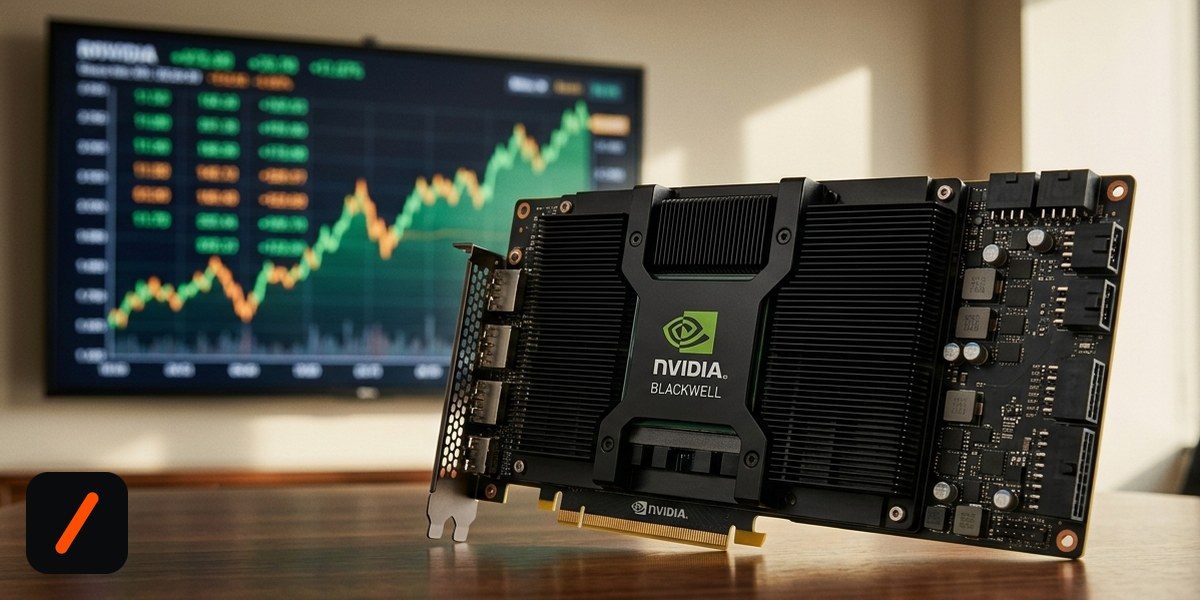
Nvidia is discussing an investment of up to $10 billion in Anthropic's initial public offering, Reuters reported this week, positioning the world's most valuable chipmaker as an anchor backer in what could become the largest IPO on record. Anthropic is reportedly seeking close to $2 trillion in the offering and up to $100 billion raised, more than double the $965 billion the company commanded four months ago, with a target of pricing before the U.S. midterm elections in November.
- Nvidia is in talks to anchor Anthropic's IPO with up to $10 billion, according to Reuters' sources; nothing is signed, and both companies declined to confirm specifics.
- Anthropic is targeting a valuation near $2 trillion and a raise of up to $100 billion, more than double the $965 billion it commanded in May 2026.
- The offering follows a confidential S-1 filed on June 1, 2026, and comes as Anthropic's annualized revenue run rate climbed from $30 billion in the spring to $65 billion by the end of July.
- An anchor stake from Anthropic's own chip supplier would mirror Nvidia's existing $100 billion compute-and-equity commitment to OpenAI, and it revives a real question about circular financing inside the AI boom.
What exactly is Nvidia reportedly putting on the table?
An anchor investor is a big check committed before an IPO is marketed to the wider public, meant to signal confidence and pull other buyers in behind it. Reuters' sources describe Nvidia discussing exactly that role for Anthropic, at a size, up to $10 billion, that would be one of the largest anchor commitments ever attached to a tech listing. The talks are preliminary. Anthropic declined to comment when Reuters asked, and Nvidia had not responded at the time the story ran. A number this size can still move before any S-1 becomes public, and neither company has confirmed the figure independently.
RelatedCognition eyes $40B, and the multiple actually fell
Why would Anthropic's chip supplier also want to be its shareholder?
Because the two relationships already run in the same direction. Anthropic has committed to roughly a gigawatt of compute capacity built on Nvidia's Grace Blackwell and, later, Vera Rubin systems, and Jensen Huang has said publicly that Nvidia can currently meet about 70% of the demand it's seeing across customers. Owning equity in the company buying that much silicon locks in a customer relationship at the exact moment two of Anthropic's other big backers, Google and Amazon, are also its landlords: both supply Anthropic with their own custom chips, TPUs from Google and Trainium from Amazon, which compete directly with Nvidia's GPUs for the same workloads. An IPO stake gives Nvidia upside without having to win a chip-by-chip fight it might not win on price alone.
| Backer | Nvidia → Anthropic | Nvidia → OpenAI | Amazon → Anthropic | Google → Anthropic |
|---|---|---|---|---|
| Reported size | Up to $10B, IPO anchor stake (in talks) | Up to $100B, progressive as 10GW deploys | ~$8B cash, completed 2024 | ~$3B+ cash, plus a TPU supply deal reported in the tens of billions |
| What it buys | Equity via the public offering | Equity plus a guaranteed buyer for Vera Rubin systems | Equity plus a Trainium chip customer | Equity plus a TPU customer and cloud infrastructure |
| Status | Preliminary, unconfirmed by either side | Signed letter of intent, Sept 2025 | Closed | Cash closed; TPU deal announced separately |
| The circularity worry | Chip supplier becomes IPO shareholder | Chip supplier bankrolls its own biggest customer | Cloud host invests in the lab it hosts | Chip and cloud supplier invests in the lab it supplies |
None of this is illegal or even unusual by the standards this industry has already set. It is, though, the same structure critics flagged when Nvidia's OpenAI deal surfaced last year: a supplier's revenue and a customer's spending increasingly come from the same handful of balance sheets, which makes it harder for outside investors to tell how much of the AI boom's growth is organic demand versus vendors financing their own sales.
How did Anthropic get from $61.5 billion to a $2 trillion ask?
- Mar 2025Anthropic closes a round at a $61.5B valuation.
- Sep 2025A new raise nearly triples that to $183B.
- May 2026Series H values the company at $965B. The round itself raised $65B, a separate figure from the revenue number below.
- Jun 1, 2026Anthropic files confidentially for an IPO. The first frontier AI lab to formally start the process.
- Jul 2026Annualized revenue run rate hits $65B. Up from roughly $30B earlier in the year.
- Aug 11, 2026Riot Platforms signs a ~$9B, 20-year power deal with Anthropic.
- Sep 2026Nvidia in talks for a $10B anchor stake. Reuters reports a ~$2 trillion IPO target, aiming to price before November's midterms.
Worth untangling those two $65 billion figures, because they measure completely different things and the coincidence is easy to misread: the May round raised $65 billion in new capital, while the $65 billion mentioned for July is Anthropic's annualized revenue run rate, what the company would earn in a year at its current pace. Same number, unrelated metrics, four months apart.
What does this mean for Nvidia's stock and Anthropic's IPO math?
For Nvidia (NASDAQ: NVDA), a confirmed $10 billion commitment is a rounding error against a company generating over $100 billion a quarter, but the signal matters more than the dollar figure. It tells the market Nvidia is willing to underwrite the demand side of its own supply chain, the same logic behind the OpenAI deal, and investors have mostly rewarded that pattern so far rather than punished it for concentration risk. The bigger number to watch is the $2 trillion ask itself: against a $65 billion revenue run rate, that's roughly 30 times revenue, an aggressive multiple even by the standards of this cycle's other AI listings. Underwriters pricing the deal will lean hard on how fast that run rate keeps climbing between now and the roadshow, since a multiple that steep leaves little room for a growth wobble.
RelatedStripe Buys OpenRouter for $7B, Betting Routing Is Billing
What's the skeptical read?
Three things. First, preliminary talks reported by unnamed sources routinely shrink, restructure, or fall apart before a deal is final, and Reuters' own framing treats this one as fluid. Second, a chipmaker anchoring the IPO of a company it also supplies and now partly funds through infrastructure deals like the Riot Platforms agreement is exactly the kind of related-party structure that invites scrutiny from the SEC or antitrust regulators, particularly with Nvidia's OpenAI arrangement already drawing similar questions. Third, targeting a price before November's midterms is a tight, self-imposed deadline. Chip export policy, a rate move, or a rough week for tech IPOs generally could force a delay regardless of how ready Anthropic's numbers are.
- Whether $10 billion survives to signing. Anchor commitments this size are routinely renegotiated between a leak and a final S-1.
- Regulatory attention on circular AI financing. A second Nvidia deal shaped like the OpenAI one raises the stakes on that scrutiny.
- Whether $2 trillion survives the roadshow. Public-market investors can be less patient with a 30x revenue multiple than private ones were.
- The next revenue print. A run rate still climbing past $65B is the strongest argument for the valuation; a plateau would undercut it fast.
Our take
The logic for Nvidia is sound: locking in equity alongside a customer that's already committed to a gigawatt of your hardware costs relatively little and buys real influence over how that relationship evolves. The logic for Anthropic is sound too, an anchor investor de-risks pricing the largest IPO in history, which matters more right now than any debate over the exact multiple. What deserves real skepticism is the size of the ask relative to actual revenue, and how normalized chipmaker-as-shareholder deals have become in under a year. Reuters' sourcing means this could still change shape more than once before Anthropic rings a bell. We'll be tracking the S-1 as it becomes public.
- ReportingBloomberg, via Reuters the original report on Nvidia's IPO talks
- Reporting24/7 Wall St valuation and raise-size figures
- OfficialNVIDIA Newsroom the $100B OpenAI compute-and-equity deal, for comparison
- BackgroundGenZTech: Anthropic Files Confidentially for an IPO our June 2026 coverage of the S-1 filing
GenZTech will keep tracking the Anthropic IPO as new filings and disclosures land.